
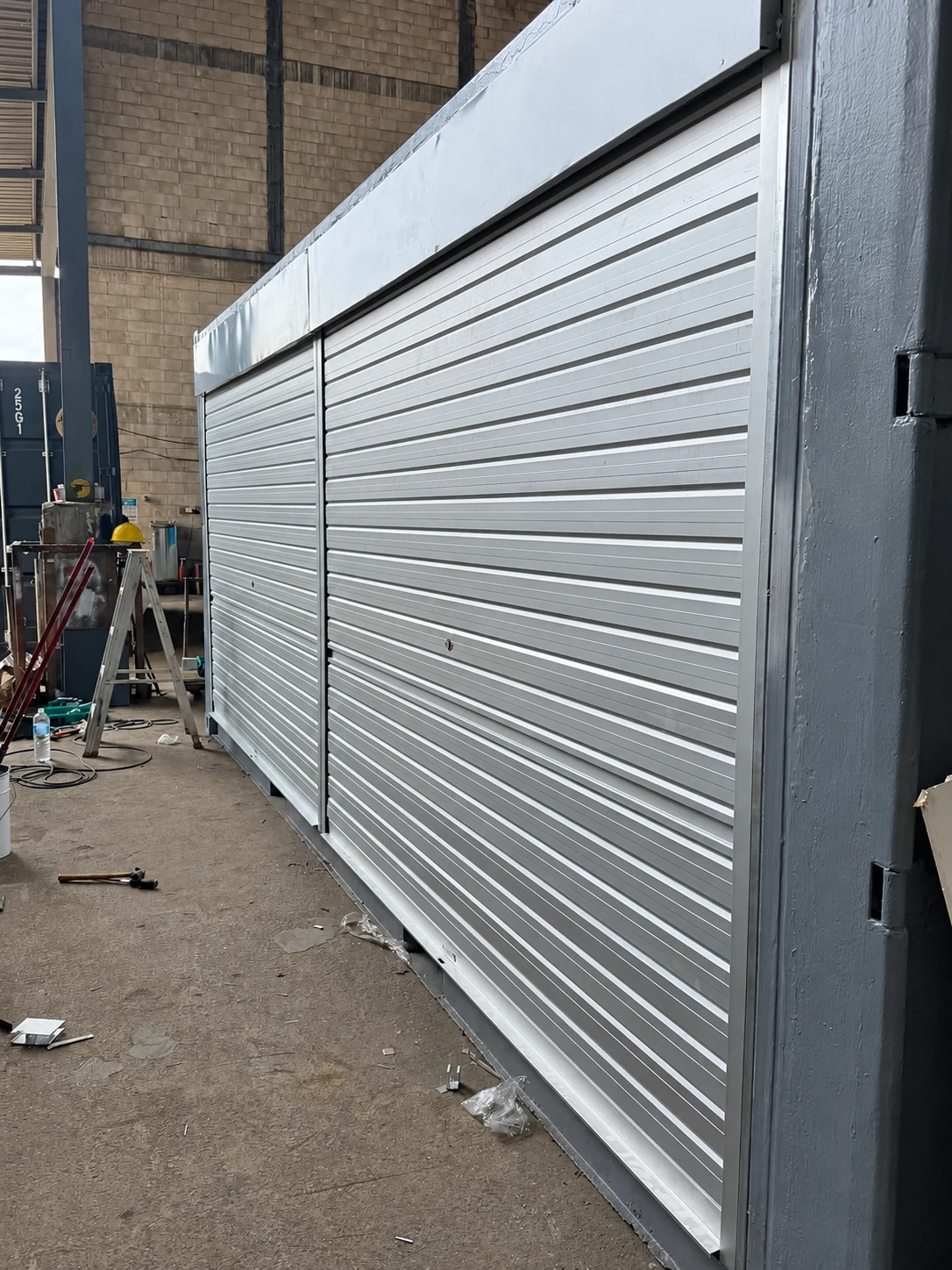
Describe the gap without trying to remove it
Say whether the gap is similar across the opening or noticeably different at one side. Give an approximate description from a safe position rather than placing hands, tools or a measuring tape under the curtain. A full-opening photograph can be more useful than a precise measurement taken in an unsafe location.
Explain whether this is a new stopping position or an issue that has developed over time. Keep a photograph from an earlier normal condition if one exists. Do not pull down on the bottom bar, add weight or try to push the curtain sideways so it reaches the floor. Those actions are not a reliable way to identify the cause.
Record what happened during the last normal attempt
Describe the sequence already observed: whether the curtain moved smoothly, stopped suddenly, made an unusual sound or returned upward. State which normal control was being used. There is no need to repeat the movement to obtain an exact sequence when the shutter has already shown an unsafe or unusual condition.
Also note whether the opening is now secure, unavailable to people or affecting a delivery. An enquiry that includes both the symptom and its practical effect lets the site discuss next steps more clearly. A1’s roller shutter repair page explains the basic information to share.
Look at recent changes around the opening
Tell the contractor about recent impact, floor works, cleaning activity, fit-out changes or work to adjacent equipment. These details may be relevant to an assessment, but the timing of an event does not prove it caused the fault. Keep the account factual: “floor works finished yesterday” is more useful than “the floor contractor broke the shutter”.
From outside the travel area, note visible debris, a new obstruction or a changed arrangement at the opening. Do not reach under a partly closed shutter to clear an object. If the area cannot be safely accessed, say so and leave the condition for the responsible site team and contractor to assess.
Keep possible causes separate from confirmed findings
A stopping issue may involve the curtain’s path, its guides, the operating system or an installation-specific protective response. An uneven position and a consistent level gap are useful distinctions, but neither tells an owner which component to order. An adjustment described for a different motor is not necessarily suitable for this shutter.
For example, Cornell’s operator information shows that motor and control arrangements vary across products. Use the installed model’s records rather than assuming every powered shutter behaves the same way. Do not bypass a protective device or change travel settings to make the symptom disappear.
Build a short, complete repair enquiry
Prepare a message containing the address and opening reference, whether operation is manual or motorised, the current position, when the problem started and any relevant event. Attach the overview photograph and available equipment information. Identify the person who can arrange access and explain any building-management requirements.
- Is the bottom edge level or visibly uneven?
- Does the issue prevent the premises from being secured?
- What sound or movement was already observed?
- Was any work or incident recorded before the change?
If the opening is powered, include the usual control type when making a motor shutter enquiry.
Ask for the finding as well as the proposed work
When a scope is proposed, ask what has been assessed and what remains to be confirmed. The useful question is not simply whether the shutter can be made to touch the floor. It is what explains the changed closing behaviour and what is needed for the installation to be returned to its agreed operation.
Keep the completed-work record and ask for any updated operating instructions or remaining restrictions. If further investigation is needed, record the next action and who is arranging it. The quotation checklist can help compare the proposed scope with the fault originally reported, especially where a photograph was only the first stage of the discussion.