
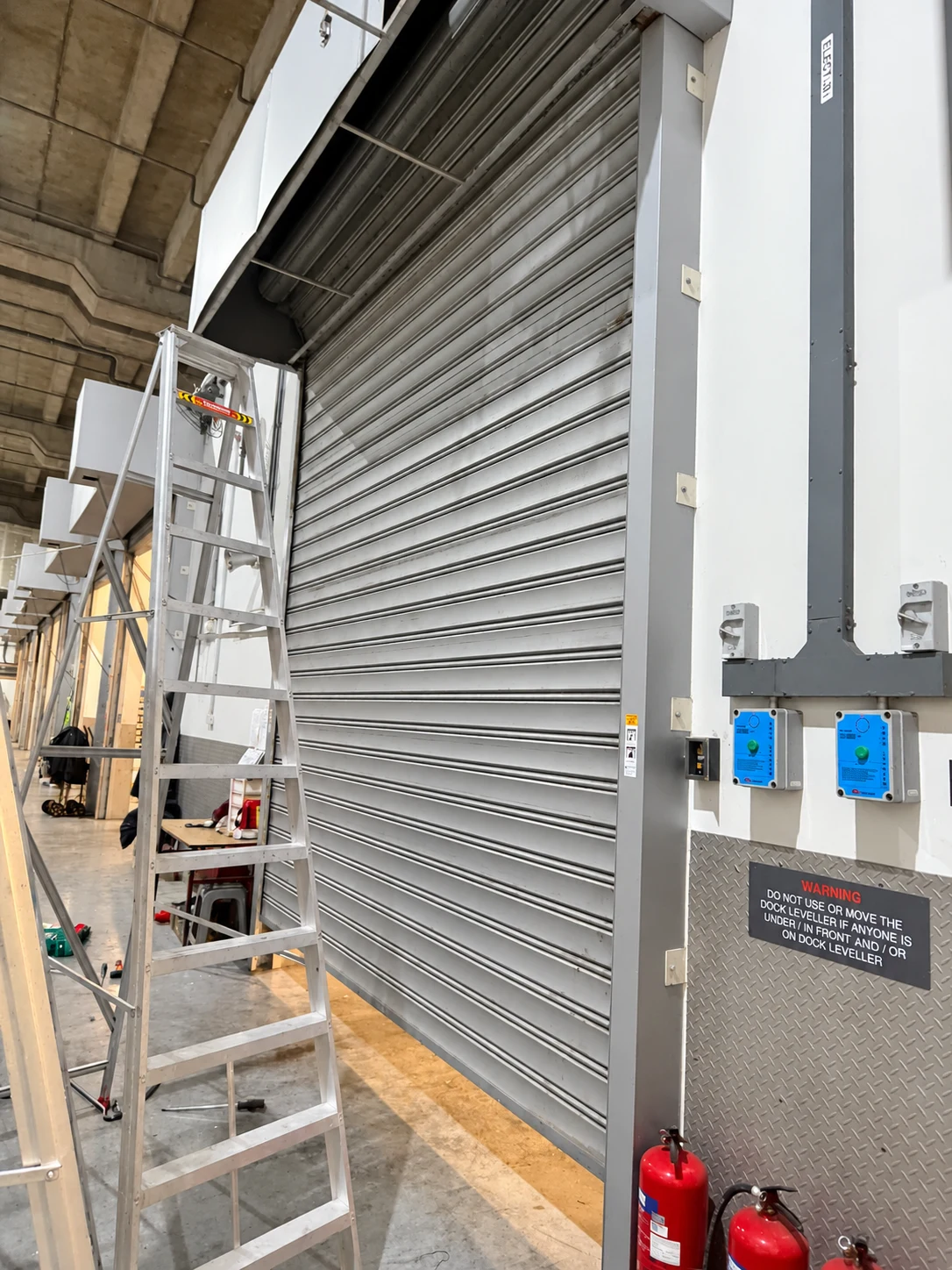
Describe the present position and immediate site impact
State whether the shutter is partly open, partly closed or difficult to judge from the available view. An overall photograph taken from a safe position is more helpful than an estimate of the gap alone. Keep people clear of the opening where the shutter’s behaviour is uncertain.
Explain the practical impact: deliveries cannot enter, staff need another route, or the premises cannot currently be secured. Identify the person responsible for the opening and the person who can agree access arrangements with the contractor. These details help prioritise the conversation without turning the enquiry into a claim about the cause.
Record the last sequence in ordinary language
Write down which normal control was used and what happened next. For example, “the shutter started closing, paused around the middle and remained there” describes the sequence without claiming a failed motor or a control fault. Mention a sound or visible movement change if it was already observed.
If the shutter has stopped at different positions on separate occasions, include the dates or approximate sequence rather than testing it again. State whether the current incident followed a known impact, recent work or an earlier fault report. A clear timeline can be more informative than several short messages saying that the shutter is stuck.
Do not bypass a stop or force the curtain
A stop during travel is a symptom for assessment. It should not be treated as permission to bridge a device, change settings, open an electrical enclosure or operate the curtain by an improvised method. Do not reach beneath or into the shutter to clear something that has not been safely assessed.
General HSE guidance identifies unexpected movement and interference with safety functions as machinery hazards. The correct response for the installation must be agreed with a competent person, using the applicable operating information. An online reset sequence for another product is not a suitable substitute.
Keep controls, sounds and movement as separate observations
When arranging motor shutter assessment, distinguish what the user did from what the system appeared to do. A button was pressed; a sound was heard; the curtain moved or did not move. Combining those facts into “the motor has failed” can narrow the conversation prematurely.
For a manual shutter, describe the movement and change in effort instead of motor behaviour. Note whether one side appeared lower or whether there was visible curtain damage. Do not assume that the point where the shutter stopped identifies the location of the fault.
Ask what must be checked before normal use resumes
The proposed shutter repair assessment should explain what investigation is needed and how any recommended work follows from the findings. Ask whether the visible curtain, guides, operating arrangement and relevant controls need consideration, rather than requesting one part in advance.
HSE’s whole-system safety guidance is useful general background to this question. The actual checks should match the equipment and site. Where further work is proposed, have the included scope and any remaining uncertainty explained before approving it.
Prepare for the visit without changing the evidence
Send the location and identify which opening is affected. Explain which side of the shutter is accessible, whether the area is occupied and which building-management arrangements apply. Provide existing manuals, earlier repair records and any photographs taken before the incident if available.
Ask what access or clearance the contractor needs, and arrange this through the responsible person. Avoid moving the shutter simply to make the opening look ready for a visit. If temporary site arrangements are proposed, clarify who will organise them and how staff will be informed before anyone assumes the opening is available again.
Keep the outcome connected to the original report
After agreed work, retain the findings, approved scope and handover information with the opening’s records. Ask what normal operation should be and how a recurrence should be reported. If a related symptom appears later, describe the change and refer to the previous job instead of assuming the same component is responsible.
The guide to a stuck roller shutter covers the wider information to share when movement is interrupted. For a shutter stopped halfway, your initial contribution is the position, sequence, history and site impact. The technical cause still needs to be established.