
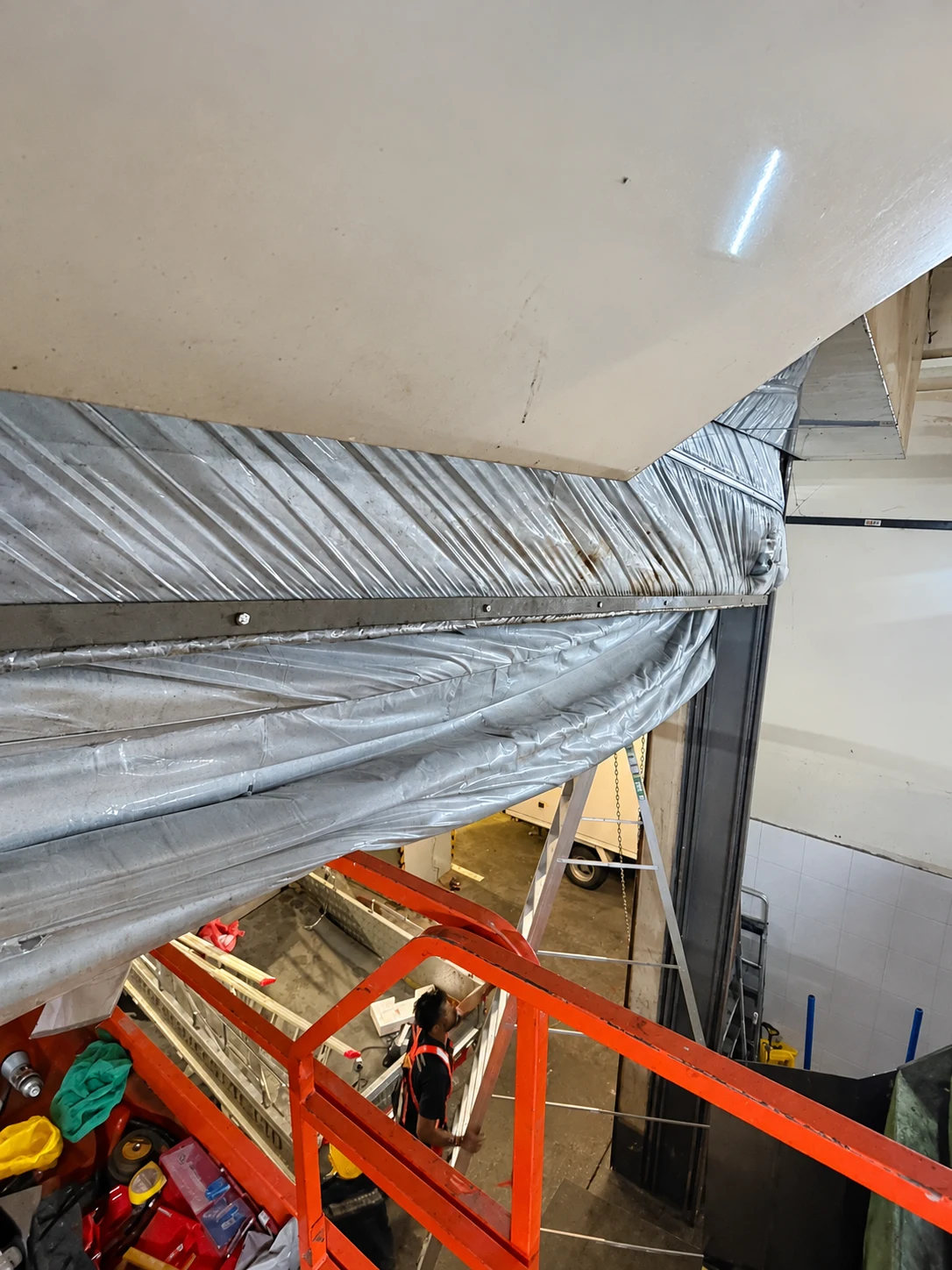
Pause use and keep the opening clear
If the shutter appears damaged or behaves unexpectedly, stop using it and keep people clear of the opening. Do not force the curtain, stand underneath a partly open shutter or attempt to pull bent sections back into place.
This is a guide to preparing an enquiry, not a repair procedure. Where someone is injured or trapped, contact the appropriate emergency service rather than waiting for an online response. For an ordinary repair enquiry, avoid testing the fault repeatedly just to capture a better video.
Describe what happened in plain language
You do not need to identify a failed part before calling. Say whether the shutter is manual or motor operated, where it stopped and what happened immediately beforehand. Explain whether the issue appeared suddenly or developed over time.
- Does it remain fully closed, partly open or fully open?
- Did it move unevenly or make a different sound?
- Is there visible damage to the curtain or surrounding frame?
- Did the problem follow an impact or other known event?
Keep observations separate from guesses. “The motor made a sound but the curtain did not move” is more useful than assuming that a particular component must be replaced.
Take useful photos from a safe position
An overview of the whole opening helps explain the situation. A second photograph can show a visible damaged area without moving closer to a suspended curtain or exposed mechanism. Use photographs you can take from normal floor level.
Do not open electrical enclosures, remove guards or use a ladder to obtain an equipment label. If safe access is not available, explain that in the enquiry. A1 can discuss the next step using the information you already have.
Send your description to Email A1 or contact A1 on +65 8284 8364. Include the premises location and a suitable contact person.
Explain the access arrangements
Tell the contractor whether the shutter is the usual entrance, whether another access route is available and whether the site is occupied. Mention any building-management contact, delivery restrictions or access times that need to be coordinated.
These practical details help define the enquiry; they do not establish the cause of the fault. Photographs cannot confirm every part of a repair scope, and the actual shutter may need to be assessed before suitable work or parts can be discussed.
Agree the repair scope before arranging work
Ask what assessment is needed, what the quotation covers and what information is still outstanding. If a replacement option is discussed, ask how it differs from the proposed repair. Keep a copy of the agreed scope for your own records.
See A1’s roller shutter repair page and job photographs. The gallery includes components, damaged shutters and work in progress; it should not be read as a set of matched before-and-after repairs.