
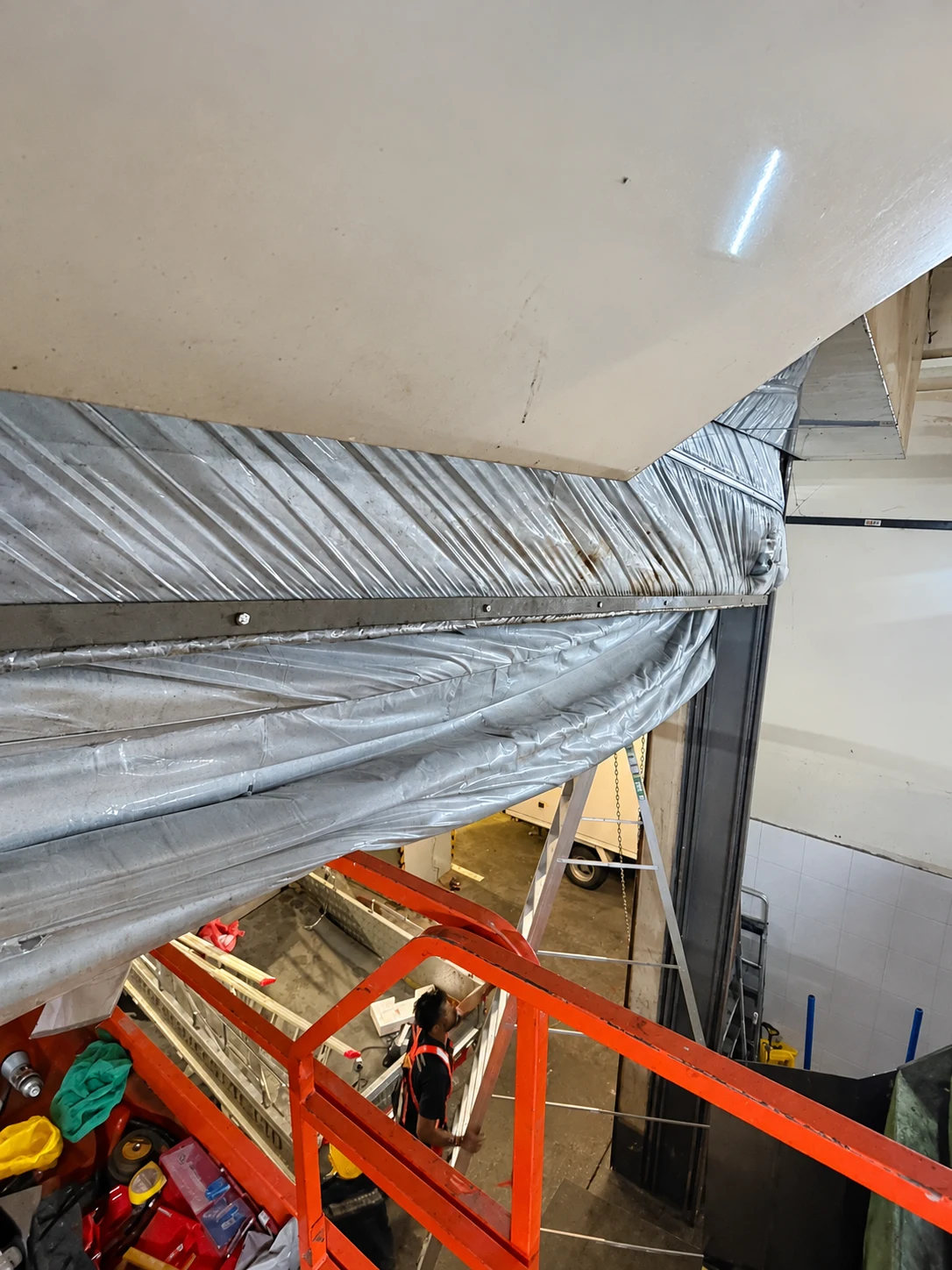
Keep the opening out of normal traffic
Keep people clear of the affected shutter and follow the site’s incident arrangements. Report the event to the manager or person responsible for the opening. Do not move under a partly raised curtain to get a better photograph, and do not use a forklift or other vehicle to hold it up.
Any immediate route changes need coordination with the people managing pedestrian and vehicle movements. A damaged loading-bay shutter can affect a wider area than the point of contact. The WSH Council’s loading and unloading guidance stresses designated work areas and reporting unsafe conditions; those are useful site-management references while repair arrangements are discussed.
Write down the event before the details are lost
Record the time, opening reference, shutter position and a factual description of the contact. Say whether the curtain was raised, lowered or moving and which part was struck. Identify any witnesses or existing footage according to the site’s own incident process. Separate facts from guesses about how the equipment was affected.
If another company was involved, use the agreed site reporting channel for their details. A repair contractor needs a technical brief; questions about responsibility, insurance or compensation belong in the appropriate management process. Keeping those records separate avoids turning a repair message into an incomplete account of liability.
Photograph the overall opening before the close-up
From a safe location, take an overview showing the curtain, surrounding wall and both sides of the opening. Add closer photographs of visible damage only where you can do so without approaching unstable parts or entering the travel area. A wide image helps explain where a close-up belongs.
- Note visible changes to the bottom bar, slats or side guides.
- Describe whether a gap or uneven position appeared after the impact.
- Include the normal approach route and any obvious access restriction.
- Keep an earlier photograph for comparison if one already exists.
Do not climb, remove covers or pull displaced material into view for the purpose of documenting it.
Do not test the damage by cycling or straightening it
Repeatedly trying the control or pulling the curtain can change the condition that needs assessment and expose people to movement. A dent that looks minor from outside does not establish that the guides, fixing points or operating system are unaffected. Equally, a visible mark alone does not prove that the whole shutter requires replacement.
Leave mechanical conclusions to the assessment. Cornell’s service-door maintenance instructions identify damaged curtain parts and bent guides as service concerns. That manufacturer example supports documenting the condition rather than attempting a cosmetic straightening as a repair.
Prepare a repair brief with the operational impact
Give A1 the site address, unit or bay reference, operation type, current position and safe photographs. Explain whether the opening can be secured and which activities have been stopped or rerouted. Include the manager’s contact and any requirements for access, permits or escorts.
Ask what can be assessed from the available information and what requires a visit. Share equipment records and previous work relevant to the same opening if they are available. A1’s shutter repair page is the starting point; the quotation checklist helps organise the documents without assuming the repair method.
Agree the scope and return to use after assessment
A repair proposal should explain the assessed damage, proposed work and any further checks or dependencies. Ask whether the scope concerns individual parts, a larger curtain section or another part of the installation. If replacement is discussed, request the reason rather than comparing alternatives only by the number of visible dents.
Record any temporary restrictions and who will communicate them to the next shift. After the agreed work, obtain the findings, operating handover and outstanding actions. Keep this with the incident record so a later enquiry can distinguish the original impact from a new symptom. For powered installations, the motor shutter information also helps frame questions about operation.