
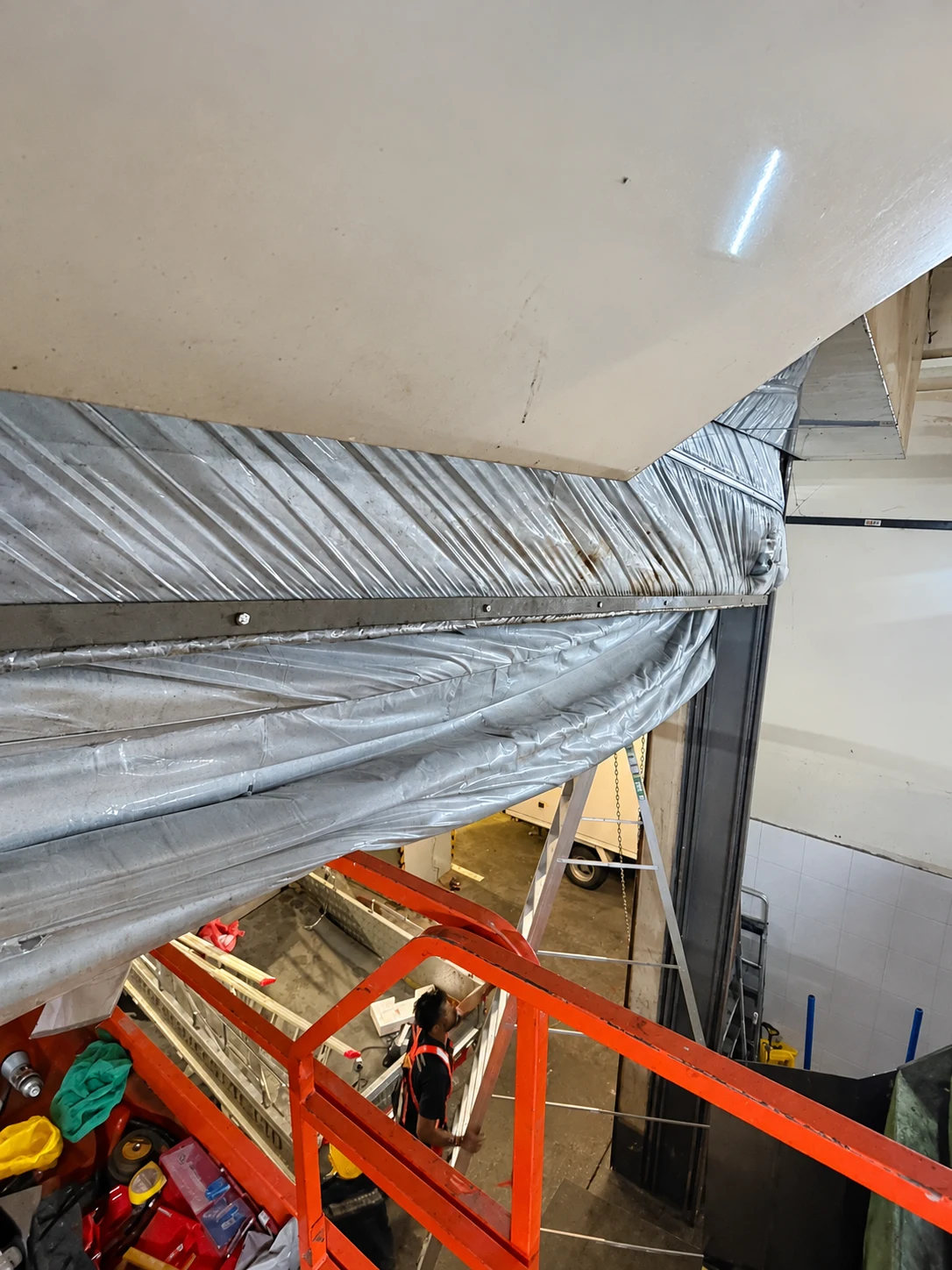
Show the affected area in the context of the whole curtain
Begin with a photograph of the complete opening from a safe position. Add a closer image only when it can be taken without approaching an unstable curtain, standing beneath it or entering a restricted area. The overall view helps relate the damaged section to the bottom edge and side guides.
Describe whether the damage is a dent, a sharp crease, a torn area or a change in the way adjacent slats sit together. Note whether one area or several rows appear affected. You do not need to determine how many replacement slats are required; that is part of the assessment.
Explain the event without guessing the hidden consequences
If the damage followed contact with a vehicle, trolley or other object, record the date and what is known about the incident. Identify the affected opening and share any incident photographs already available. Keep your description factual if nobody witnessed what happened.
A superficial mark and a heavier impact can require different investigations. Ask the contractor whether the visible damage suggests checking related parts of the assembly, without assuming that a photograph reveals their condition. If building management or another party needs an incident record, use the same opening label and timeline across the repair enquiry and site report.
Separate the visible damage from the operating history
Tell the contractor whether any operation took place after the damage and what was observed at that time. Mention uneven movement, unexpected stopping or a change in sound if these occurred. If the shutter has not been operated since the incident, say so rather than testing it for the enquiry.
Do not repeatedly run a damaged curtain to see whether it will pass through the guides. Do not push, hammer or lever a slat back into shape. Keep the opening clear while the responsible person agrees the next step with a competent contractor. A clear “not operated since impact” record is useful information.
Ask what a localised repair would include
A shutter repair proposal should identify the damaged components and explain whether a localised repair is suitable. Ask which parts would remain and whether compatible curtain components can be confirmed for the existing system. The finish of a replacement section is another detail to discuss before approval.
If the recommendation is wider curtain work or complete replacement, ask why the smaller option is unsuitable. An explanation tied to inspection findings is more useful than a statement that damaged slats always require a new shutter. Equally, do not assume that replacing the visibly marked section addresses every consequence of the incident.
Include access, displays and security arrangements
Tell the contractor if shelving, merchandise or a working area is close to the damaged shutter. Discuss what needs moving and who will arrange it. If the premises cannot be secured, state that clearly and identify the person who can agree any proposed site arrangements.
Repair work can also involve coordination with a landlord, managing agent or another contractor. Establish the contact person and access process early. Do not promise staff that the opening can be used again at a particular time before assessment and scope have been agreed. Availability, parts and the actual condition still need confirmation.
Approve an explained scope and keep the evidence
Before authorising work, ask for the repair description, included parts, exclusions and how completion will be assessed. If both repair and replacement are feasible, use the repair-or-replacement decision guide to compare the proposals against the same requirements.
Keep the initial photographs with the agreed quotation and completion information. This gives the next person responsible for the opening a useful history. The purpose of the first enquiry is to present the damage accurately and arrange the right assessment, not to decide the repair method from the appearance of one slat.