
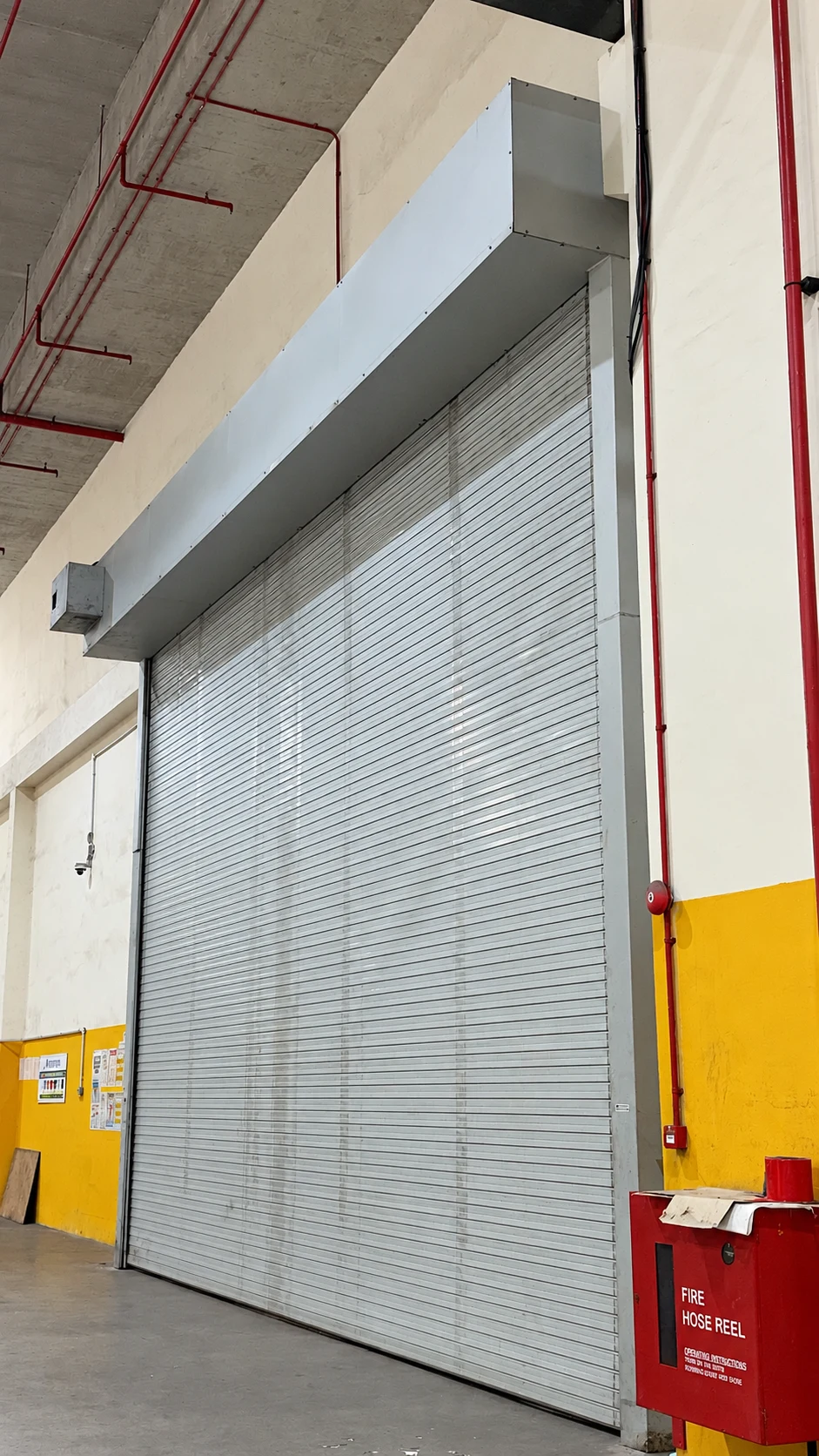
Separate restoring access from choosing a long-term solution
The first conversation may be about an opening that cannot be secured or used. Explain that situation clearly, including whether an alternative access route is available. Ask what can be assessed now and what decisions need to wait for a closer inspection.
A temporary arrangement, where appropriate and agreed for the site, is not the same as a completed permanent repair. Keep the descriptions separate in your records. This avoids approving a full replacement during an urgent conversation without understanding the alternatives, or assuming that restoring movement has resolved every concern about the installation.
Ask which parts are sound and which are compromised
For a useful comparison, ask the contractor to describe the condition of the curtain, guides, supports, operating mechanism and controls where fitted. You do not need to identify every part yourself. Your role is to provide the history and ask how the recommendation follows from the inspection findings.
A localised problem may support a defined repair when the rest of the assembly is suitable for continued use. Widespread damage or several connected concerns can change that discussion. Neither conclusion should be assumed from a photograph alone. The repair assessment should explain both the fault being addressed and any related issues the contractor identifies.
Use the fault history rather than the number of visits alone
A shutter that has needed several visits is not automatically beyond repair. Look at what each visit addressed. One original problem left unresolved is different from separate incidents over several years. Gather previous invoices and note whether the same symptom returned after the work.
Ask whether the latest proposal addresses a confirmed cause, a damaged component or only the symptom reported. If you are comparing repair and replacement, request a short explanation of the remaining risks or limitations of the repair option. A recommendation becomes more useful when it acknowledges what the proposed work will and will not resolve.
Check the practical consequences of parts availability
For an older or unidentified installation, it may take time to confirm compatible parts. Ask whether the proposed component is an exact replacement, a compatible alternative or part of a wider modification. Find out what supporting work would be needed and what documentation will be available afterwards.
A replacement quotation should also identify the removal and installation scope, rather than treating a new curtain or motor as a completely new system. For a powered shutter, general powered-door safety guidance from HSE highlights the importance of component compatibility. Your contractor should apply the correct requirements to the actual installation.
Decide whether the existing shutter still suits the opening
Sometimes the business has changed while the shutter has stayed the same. Opening frequency, staff access, display requirements or the layout around the opening may now be different. Explain those changes before asking for like-for-like replacement.
If daily operation is the concern, discuss manual shutter requirements and motorised operation in the context of the actual opening. Changing the operating method is a separate assessment, not an automatic upgrade. A replacement should answer a defined need rather than introduce features that the site cannot sensibly use or support.
Ask for comparable options with clear assumptions
Where both routes are feasible, ask for a written comparison that includes the proposed work, retained parts, exclusions, expected disruption and any stated warranty terms. Identify what remains provisional until measurements or further assessment are completed.
Consider the business arrangements as well as the works themselves. Can deliveries be redirected during the agreed work period? Who will coordinate access and approve a variation? Is removal of old material included? A lower total is difficult to judge when the two proposals solve different problems or assume different site conditions.
Make the decision traceable
Record why the chosen option suits the opening: the assessed condition, the faults to be addressed and the requirements it needs to meet. Keep the approved quotation, relevant photographs and handover information together. This makes a later maintenance or repair discussion more precise.
The aim is a defensible decision for your site, not a universal rule about the age at which every shutter should be replaced. Send A1 the existing shutter details and the questions you want the assessment to answer. The recommendation can then be discussed against the actual condition and intended use of the opening.