
Explain the change from the familiar operating effort
The person who normally opens the premises may notice the change before anybody else. Ask them when it began and what was different during the last ordinary use. Was lifting harder at the start, throughout movement or near a particular position? Was the movement also uneven or accompanied by a new noise?
Keep this as a history of what has already happened, not a request to repeat the problem. If a new staff member is reporting the issue, establish whether they were shown the correct operating procedure. Familiarity and training are separate questions from the mechanical condition of the shutter.
Describe the installed operating arrangement
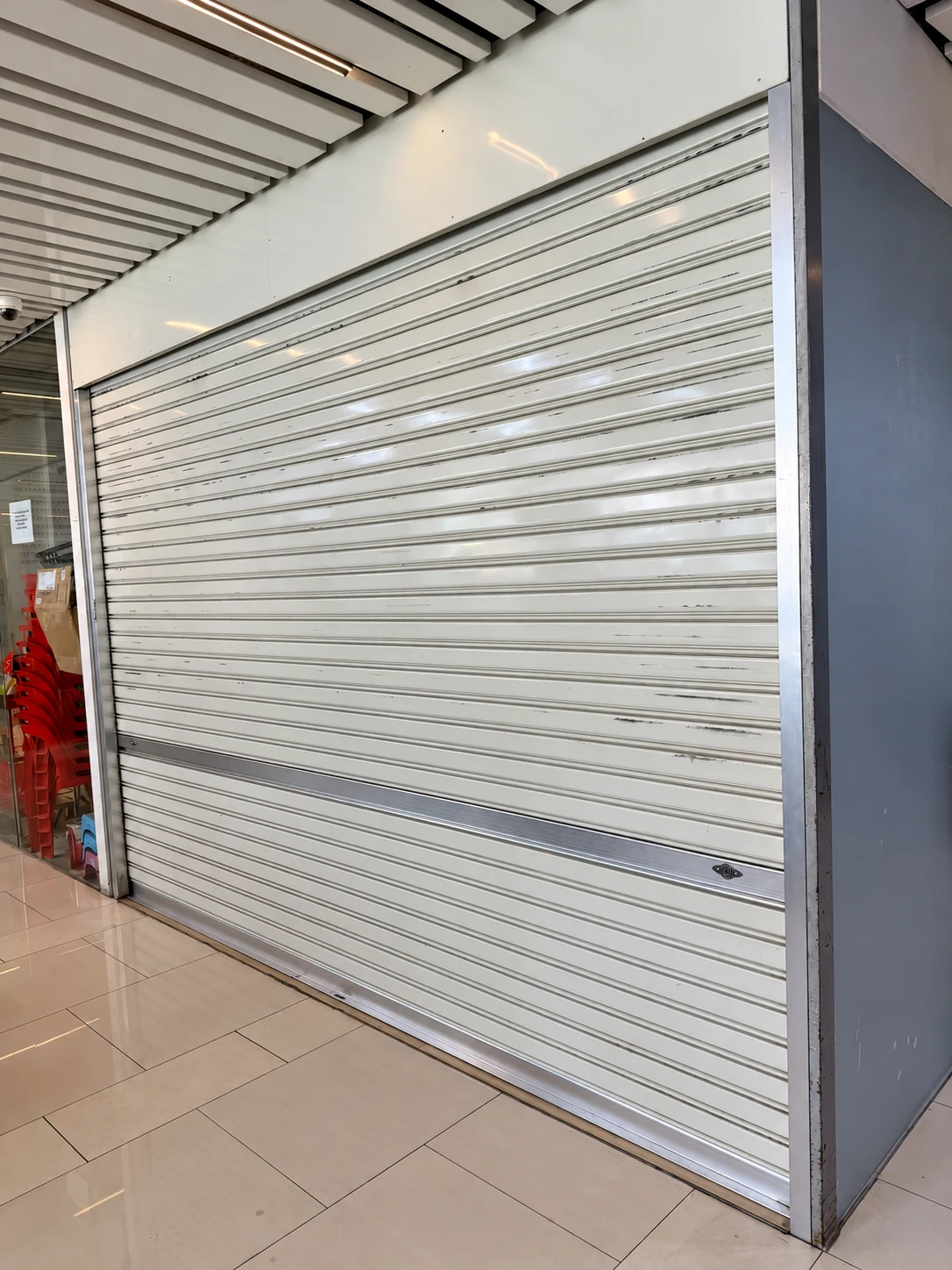
Manual shutters can have different operating arrangements. Provide an overall photograph and describe the handle, chain or other normal control as it is used on your site. Share the original instructions or earlier job records if they are already available.
Do not assume that advice for a similar-looking shutter applies to yours. The Hörmann HR120 operating manual is an example of instructions written for a particular manual rolling-shutter design. Your contractor needs to identify the actual installation before recommending adjustments, parts or a change to its operating method.
Record visible condition without investigating the mechanism
From a safe position, note any obvious curtain damage, an uneven bottom edge or marks near the sides of the opening. Mention an impact or other event if one is known. Send an overview photograph so the contractor can relate the observations to the whole opening.
Do not loosen fixings, reach into a housing or adjust tensioned parts. Do not use extra leverage, attach an improvised pulling aid or recruit a group to force movement. If the shutter is behaving abnormally, arrange the assessment rather than increasing the effort used to operate it.
Tell other users what has been reported
Where several staff share an opening, make sure the concern is passed to the responsible person. Otherwise a second shift may attempt the same operation without knowing that the shutter felt different or stopped unexpectedly. Identify the affected opening clearly if the premises has several shutters.
Discuss how the business will manage access until an appropriate decision is made. Explain whether there is another usable opening and whether the premises can be secured. General HSE safety guidance highlights competent maintenance; for an owner, reliable communication and access coordination help the assessment take place sensibly.
Ask what the assessment will establish
A manual shutter enquiry should explain the change in use and ask what inspection is needed. The contractor can discuss whether the concern relates to the existing condition, damage or another aspect of the assembly. Do not order a replacement part solely because a description online sounds similar.
When a proposal is made, ask what work is included and which parts will remain. Clarify what will be checked afterwards and whether the users need updated operating information. If the scope is provisional, have the assessment findings confirmed before approving a wider repair.
Treat motorisation as a separate decision
Difficulty lifting an existing shutter may prompt a request to make it motorised. That is a possible topic for discussion, not a way to bypass assessment of the present problem. Explain the opening frequency, usual users and reason you are considering a change.
A powered arrangement needs to suit the installation and its surroundings. Compare the practical requirements with the manual-or-motor shutter guide, then ask about the actual site. Do not assume that adding power resolves existing curtain damage, alignment concerns or unsuitable operating arrangements.
Send a concise handover for the next step
Include the premises location, a clear opening identifier, the operating arrangement and the last normal use. Add the change in effort, any related noise or unevenness, known incidents and the shutter’s current position. State what access arrangements need to be discussed.
The repair enquiry page can help start that conversation with A1. The purpose is to give the contractor enough context to plan an assessment. It is not necessary to identify a spring, shaft or other internal component yourself, and the report should not depend on another attempt to move the shutter.