
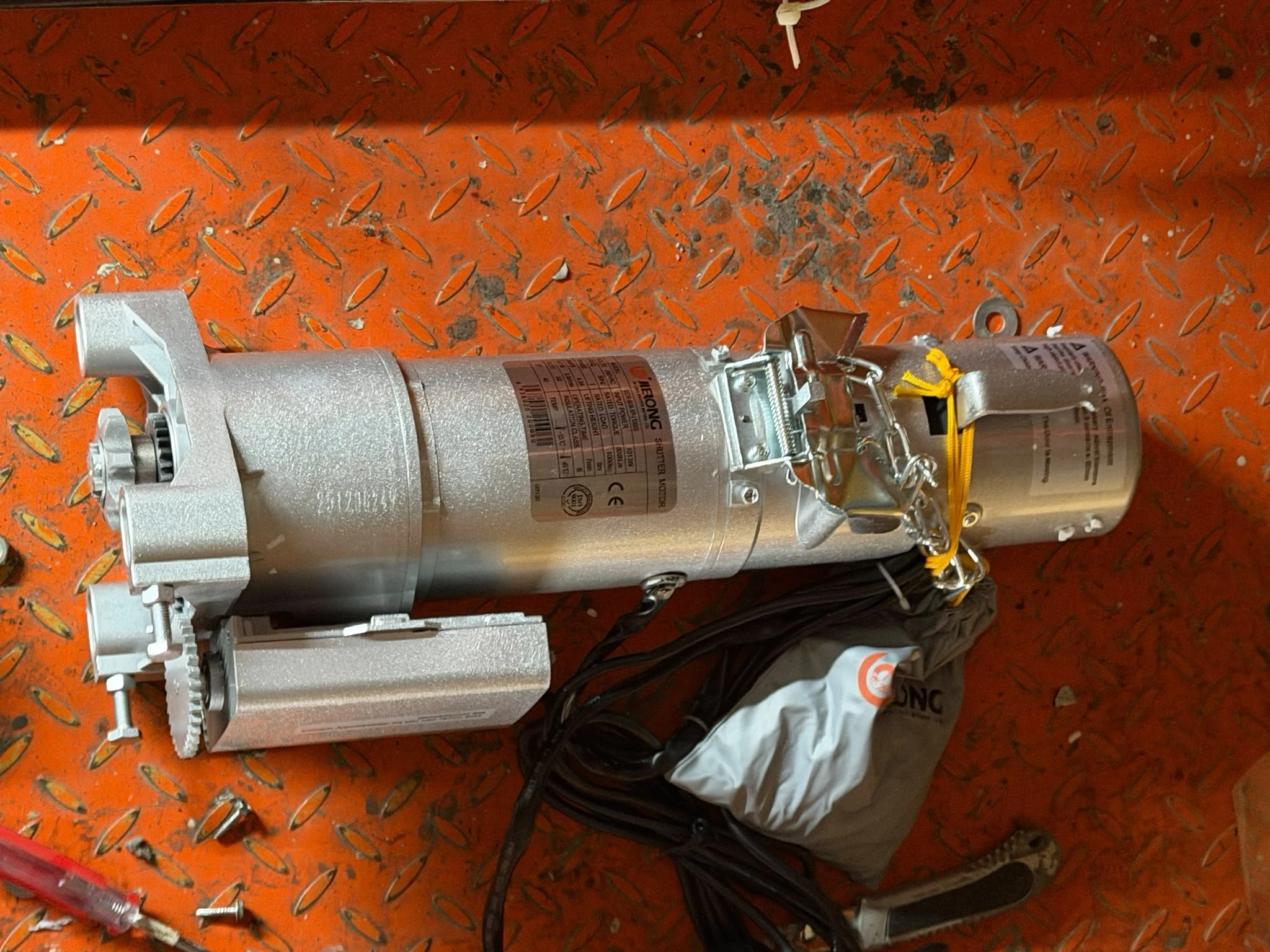
Do not turn a symptom into a motor diagnosis
Describe the last operating attempt that you already observed. Did the curtain move at all? Was there an unexpected stop? Did a sound come from the opening? Record the usual control and whether the issue appeared suddenly, while avoiding a sequence of further attempts to collect more symptoms.
A silent shutter does not by itself prove that its motor needs replacing, and a noise does not identify the failed part. Send the observations with an overall photograph and any equipment information already available. The motor shutter problem guide helps organise this initial report without making a diagnosis from the message.
Ask what else needs to be assessed
The motor is part of an installed system rather than a standalone appliance. Ask the contractor whether the curtain’s condition, mechanical arrangement, controls and related safety features need assessment before a motor recommendation can be confirmed. Explain any recent impact, repair or change in use.
General HSE guidance on powered-door safety considers the combined assembly and the compatibility of its parts. This supports a whole-system discussion; it does not establish the cause of your fault. The actual findings and applicable requirements still need to be confirmed for the installation.
What to ask when a repair is proposed
Request a clear explanation of the confirmed problem and what the proposed repair covers. Will existing components be retained? Does the proposal depend on further inspection or parts confirmation? Ask what remains uncertain and how any additional work would be authorised.
The phrase “motor repair” can be used loosely in conversation. Have the quotation name the work rather than assuming it means internal motor repair, control work or a wider mechanical repair. If the contractor considers a component unsuitable for repair, ask for the reason so the decision can be evaluated against the alternative proposal.
What to ask when replacement is proposed
A replacement proposal should identify the selected equipment and explain its suitability for the shutter. Ask which related parts, controls and installation work are included. Do not choose a motor on a larger stated output alone; suitability needs to be assessed for the actual operating arrangement.
Find out whether the familiar controls will remain and whether users will need different instructions. If a compatible alternative is being offered because an exact replacement is unavailable, request that explanation in writing. Provide any original documents you hold so the contractor has a better basis for identifying the existing system.
Discuss interruption and access arrangements in advance
If the shutter is stopped partly open or cannot secure the premises, tell the contractor and the person responsible for the site. Agree how people, goods and deliveries will be managed while the opening is unavailable. Avoid planning the work around an assumed repair duration before the scope is known.
Do not improvise a manual release, bypass a control or open the motor enclosure. Any alternative operating procedure must be appropriate to the installed product and the situation, and handled by the responsible competent person. An online sequence for a different shutter is not a substitute for those instructions.
Ask about testing, records and user instructions
Before approving motor shutter work, ask how the completed installation will be checked and what information will be handed over. Clarify the scope of any stated warranty and retain the actual terms rather than relying on an informal description.
Keep the equipment details, repair invoice and instructions together. If controls or operating arrangements change, ensure the people who normally use the shutter receive the correct information. HSE’s equipment maintenance guidance also emphasises competence and suitable instructions as general machinery-safety principles.
Compare the proposals against one agreed problem
Where repair and replacement are both feasible, compare the full scope rather than the headline component price. Note what each option addresses, what it retains, what remains uncertain and what access or supporting work is excluded. Ask the contractor to explain the recommendation in terms of the assessed condition and your intended use.
A1’s repair enquiry is a place to start that discussion. Send the location, symptom history, operating type and available photographs. A useful reply will establish the next assessment step; it should not require you to identify an electrical or mechanical fault yourself.