
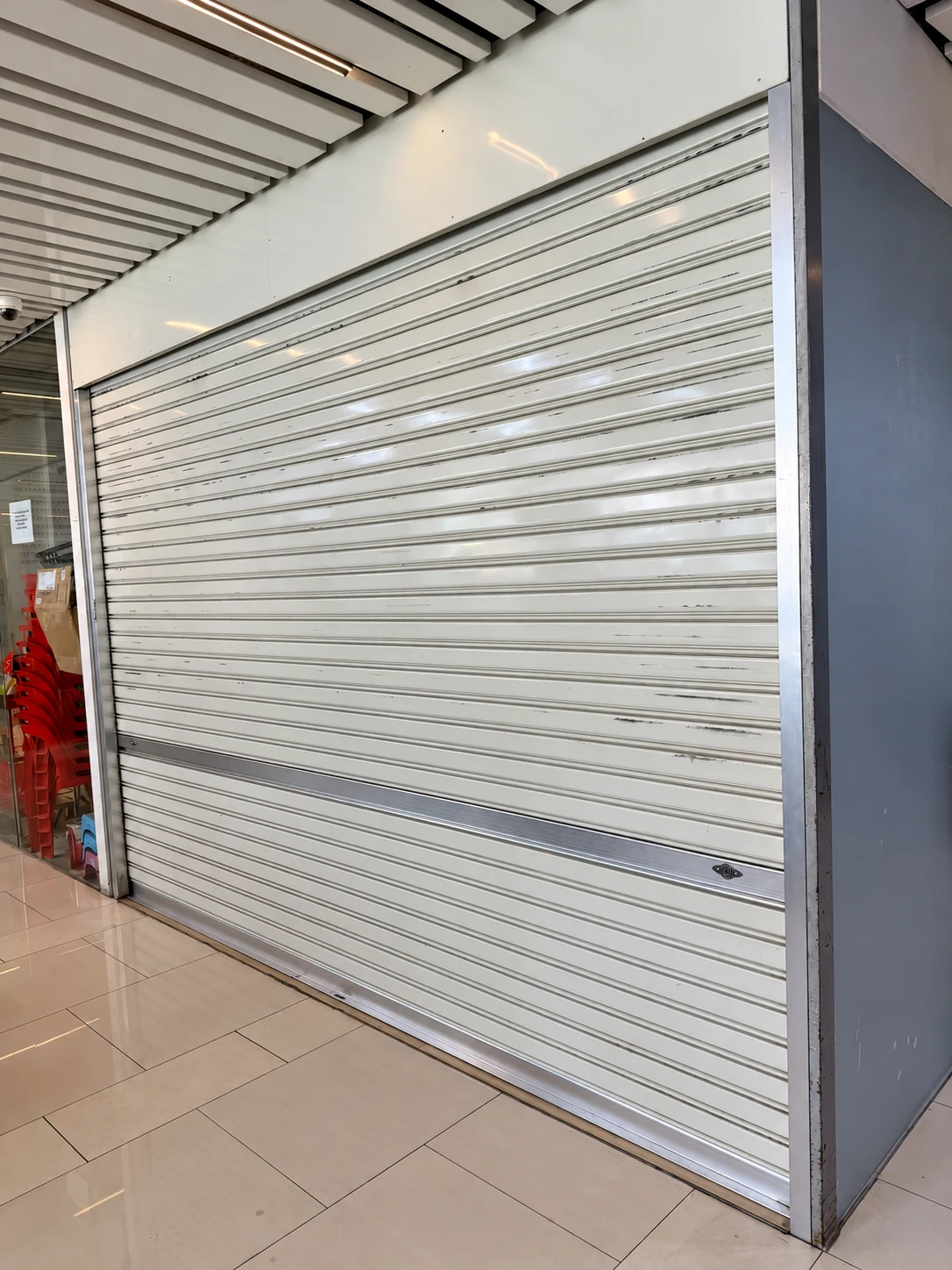
Two different ways to keep the interior visible
A perforated roller shutter has small openings through its curtain material. The holes create a filtered view rather than an uninterrupted transparent surface. A polycarbonate shutter uses clear material within a shutter system, giving a different view through the closed frontage. Joining strips and other components remain part of the appearance.
Do not confuse either design with an open roller grille, and do not assume that every product sold under the same category has identical construction. Ask for the proposed product’s drawing or sample. The sizes, joining arrangements and frame details need to be understood as part of the actual system being offered.
Think about the display from the customer’s position
Describe what a passer-by should see when the business is closed. A single promotional display near the opening creates a different brief from a showroom where the entire interior is intended to remain visible. Consider where the lighting is positioned and whether the view should extend beyond the front display into staff or storage areas.
Look at examples from a comparable viewing distance. A close-up of perforations can exaggerate their apparent openness, while a transparent product photograph taken under ideal lighting may not show how reflections affect your own frontage. Illustrations help communicate a preference; a material sample and project-specific discussion help refine it. A1’s product section shows the two categories.
Keep the material and the colour finish separate
When comparing options, identify which parts form the curtain and which parts receive a colour or surface finish. A “powder-coated” description concerns a finish; it does not by itself describe the transparency, perforation pattern or construction of the complete shutter. Ask the proposal to name both the product type and the finish.
As a manufacturer example, Hector’s polycarbonate product information describes clear panels combined with metal strips. That illustrates why a system includes more than one material. It does not establish the materials or options in A1’s proposed shutter. Confirm the selected construction directly rather than transferring another manufacturer’s specification into your enquiry.
Discuss the surroundings and care information
Tell the supplier whether the opening faces a sheltered internal walkway or another setting, and what cleaning access is available. Ask for the proposed manufacturer’s care instructions, including which cleaning products and methods are suitable. Do not infer a universal cleaning routine from the word “clear” or “metal”.
Also explain what happens around the opening during trading and after closing. Display stands, deliveries and people queuing near the frontage affect how the space is used. Those facts belong in the brief even though they do not determine the shutter model by themselves. Keep proposed maintenance and operating arrangements tied to the supplied product and site assessment.
Confirm ratings and operation as separate requirements
Neither small perforations nor transparent panels demonstrate a tested fire rating. If the project requires fire separation or another certified performance, supply the requirement and ask for evidence relating to the proposed assembly. A general product image or a material label is not that evidence.
Operation also needs its own discussion. The choice between manual operation and motorised operation should be reviewed against the opening and its intended use. Do not assume that the curtain style settles motor size, control type, available headroom or which existing parts can remain when an older shutter is replaced.
Prepare a comparison that can lead to a quotation
Send an overview photograph, the address and unit, the current opening arrangement and the visual result you want. State whether the enquiry is for a new installation, a replacement or a question about an existing shutter. Include management requirements and available drawings rather than relying on a catalogue image as the entire brief.
Ask each proposed option to identify the curtain construction, frame, finish, operation and scope of installation. Record which details depend on measurement or further assessment. If there is an existing fault, raise that through the repair enquiry separately so appearance choices do not obscure a condition that first needs attention.